
Searching Cherokee County Civil Dockets
The paid Just One Look trial-court service carries Cherokee County civil case information remotely. Pick Cherokee County and the right civil division first. A full case number works best. With only a party name, narrow the results by court, filing year, claim category, and case style. Common names generate false hits. Check that the court and case details line up before trusting any match.
The Cherokee County Circuit Clerk keeps the official Circuit Civil, District Civil, Small Claims, and Domestic Relations files. You can view the electronic docket free at the courthouse. Or call (256) 927-3637. Visit the counter in Suite 102 at 373 East Main Street in Centre. You can also send the official written records form, or request mail service. Hours run weekdays from 8:00 a.m. to 4:00 p.m. The office closes noon to 1:00 p.m. Before paying for a search, ask about an older case. It may be electronic, on paper, on microfilm, off-site, or transferred.
- Classify the claim as Small Claims, District Civil, Circuit Civil, or Domestic Relations before searching.
- Use Just One Look, choose Cherokee County, and enter the exact case number when it is available.
- When searching by name, match the court, filing date, case type, party roles, and case style.
- Read complaint, service, response, motion, order, setting, judgment, and post-judgment events in date order.
- Visit, call, write, or mail the clerk for free viewing, a missing document, certification, an older file, or a current setting check.
Put the division, the case number if known, the record title, the date range, your certification choice, and delivery details in any mailed request. Call before attempting a Cherokee County fax, email, or drop-box, because the clerk publishes no such channel. The broader Cherokee County Case Lookup page adds help with names, numbers, and division filters.
Cherokee County's Three Civil Lanes
Money decides the lane in Cherokee County. Small Claims sits in District Court. It runs on a simpler process with no jury and tops out at $6,000. District Civil picks up at $6,000.01 and runs through $20,000. Circuit Civil takes everything above the District Court limit. Match your dispute to the right lane before searching. Two similar cases can land on different dockets.
| Civil lane | Local range or role | Docket path |
|---|---|---|
| Small Claims | Claims through $6,000; simplified District Court process | District Court, with appeal to Circuit Court |
| District Civil | $6,000.01 through $20,000 | Cherokee District Court civil docket |
| Circuit Civil | Claims above $20,000 and other Circuit jurisdiction | Cherokee Circuit Court civil docket |
| Domestic Relations | Divorce and related domestic matters | Circuit Court domestic division |
A Small Claims appeal in Cherokee County can open a linked Circuit Court record. Note both case numbers and search both courts. Probate estates, guardianships, and similar statutory matters stay with the separate Cherokee County Probate Office rather than the Circuit Clerk's civil divisions.
The official Cherokee County District Civil page spells out the middle civil lane, including the claim range and the filing steps that separate it from Small Claims and Circuit Civil.
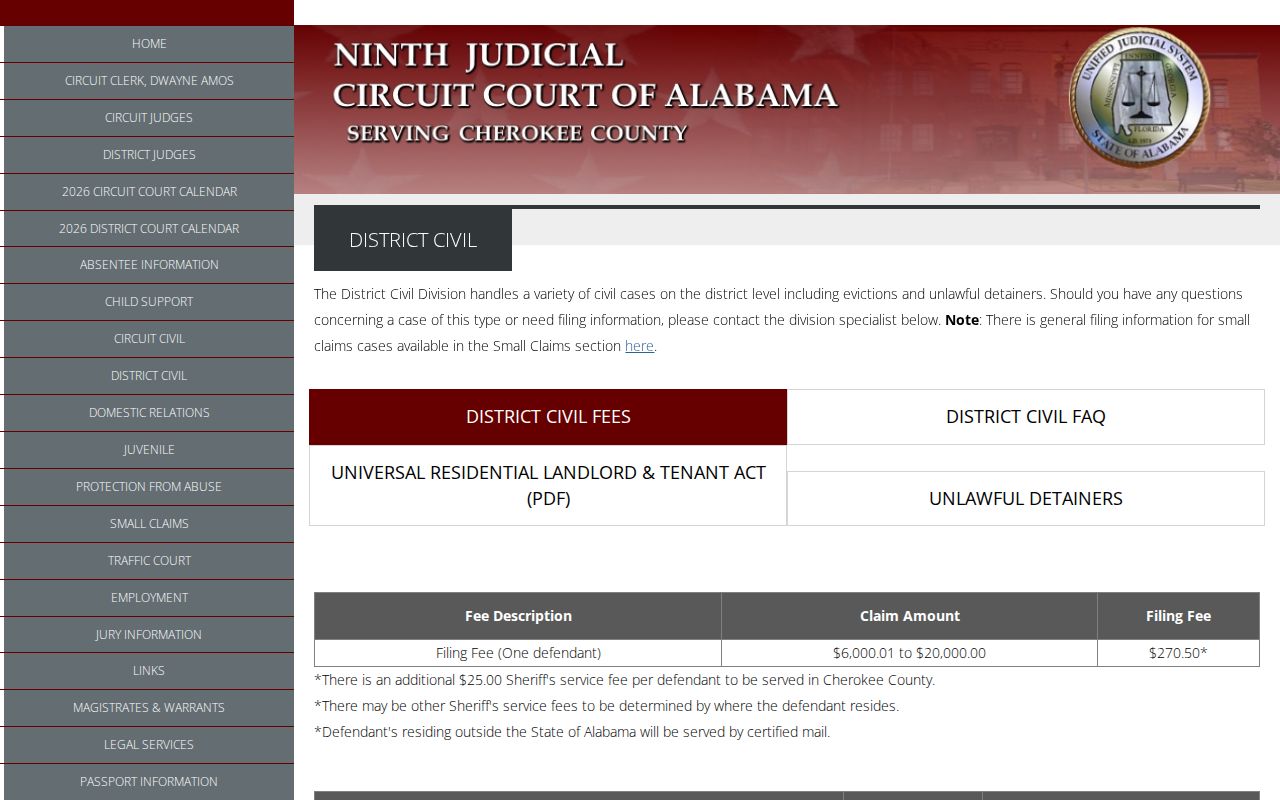
The page also helps you pick District Civil up front, so you are not hunting through the wrong division for service, hearing, and judgment entries. Choosing the right docket saves that detour.
Inside a Cherokee County Civil Docket
A Cherokee County civil docket is a dated index, nothing more. It proves a complaint, answer, motion, order, notice, judgment, or enforcement paper was entered. That brief event label is not the document itself. The county states its court records are imaged electronically. Even so, image access varies. It differs among Just One Look, credentialed systems, and the free courthouse terminal.
| Case identity | Court, civil division, filing date, case style, assigned judge, status, and a number that may include a category such as CV, DV, DR, or SM; verify live usage. |
|---|---|
| Parties | Plaintiff and defendant, or petitioner and respondent, plus counsel where shown publicly. |
| Service | Process issued, served, returned, failed, or otherwise recorded. |
| Filings and rulings | Complaint, answer, motions, notices, orders, and the dates each was entered. |
| Outcome | Judgment, dismissal, transfer, appeal, satisfaction, or other disposition. |
| Later activity | Garnishment, execution, writ, satisfaction, appeal, or another permitted post-judgment event. |
Read Cherokee County entries from oldest to newest, then circle back to the latest setting and the final order. A bare "Disposed" label may not say who won, whether a claim was dismissed, or what relief the court granted. When the image is missing, request the judgment by its date and title.
Cherokee County Civil Service Entries
Service means formal delivery of the papers that start a Cherokee County civil case. The docket may show process issued, served, returned, or left uncompleted. A filed complaint does not prove the other party was served. A request for default does not mean the court granted one.
To read the entries clearly, find the complaint first. Follow the service entries. Then check the response deadline and any answer or motion. After that, keep each request separate from the judge's ruling. A motion only asks for action. The order shows what the Cherokee County court actually did. That discipline helps most when a case looks active. No hearing or judgment image may appear.
Reading rule: Complaint filed › Service issued › Service returned › Response entered › Motion filed › Order entered.
A failed service attempt may bring a new try or a different allowed method. The event list gives the timeline; the return or order supplies the facts. Never infer the Cherokee County outcome from a short code alone.
Civil Case Types on the Docket
Civil records in Cherokee County spread across several divisions. Each has its own case types and procedures. Circuit Civil takes the higher-value claims. District Civil covers claims within its stated range, including possession cases. Small Claims offers a simplified lane for smaller disputes. Domestic Relations runs as its own Circuit Court division with separate settings and filing rules.
- Contract, debt, and other money claims assigned by the amount and governing jurisdiction.
- Property, possession, and other civil remedies filed in District or Circuit Court as the law directs.
- Small Claims cases through the local $6,000 cap, with no jury in that division.
- Domestic Relations matters, including contested and uncontested divorce proceedings.
- Post-judgment garnishment, execution, writ, satisfaction, and appeal activity tied to an existing civil case.
Probate runs on its own track in Cherokee County. The subject matter may still feel like a family or property dispute. Juvenile court records sit apart as well. They carry stricter access limits. So go by the court and division printed on your notice, not by how civil the topic sounds.
Note: A fee category only marks the filing lane you used. It says nothing about the claim's strength, result, or current status.
Cherokee County Domestic Civil Settings
In Cherokee County, Domestic Relations lives inside the Circuit Court. Its scheduling path looks nothing like an ordinary money claim. Uncontested divorce? Cherokee County imposes a 30-day waiting period before a judge may sign, assuming the paperwork is in order. Contested matters get random assignment and a trial setting, with notices mailed to counsel.
That filing date is not a judgment date. Track service, agreements, notices, settings, and the signed final order on the docket. Some filings stay sealed or protected anyway. Even then, the public civil docket remains open, so access can be narrower than it first appears. The clerk will explain recorded status and copies, though staff cannot tell a party what to file.
For the local waiting and setting framework, the county's official Domestic Relations instructions lay it out in full.
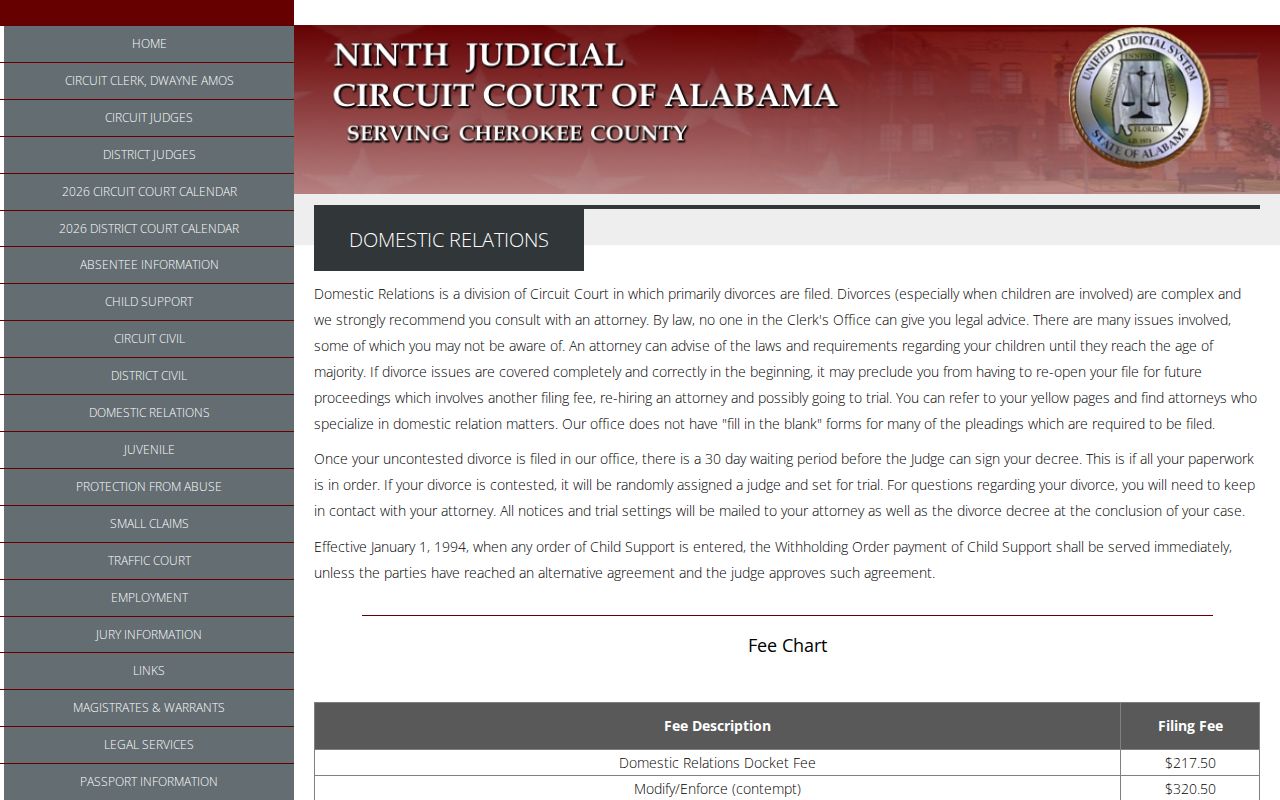
This framework explains a common puzzle. Two domestic cases filed the same week can still reach a setting or final order on very different schedules in Cherokee County.
Civil Docket Settings and Hearings
A civil setting covers many possibilities. It could be a motion, a status review, a bench trial, a jury trial, or anything else the court orders. Cherokee County posts a Circuit Court annual calendar as a PDF, but treat it as a session plan rather than a name-searchable docket. Your case notice and the newest docket entry win. They beat any general calendar date.
When a date shifts, read every entry after the old setting. Look for continuance, reset, cancellation, order, judgment, settlement, or dismissal language. Compare the event date with the date the clerk entered it. Keep the newest notice. If the annual PDF, the docket, and the notice conflict, call the Circuit Clerk. Have your case number and division ready.
Settings are not outcomes. A motion hearing does not show the motion was granted. A trial setting does not prove a trial happened. A later judgment or dismissal can wipe out a future setting, while a post-judgment filing may reopen activity after the main claim closed.
Cherokee County Civil Filing Tiers
The clerk's civil fee charts help you spot the right division. They are not docket copy prices. Circuit Civil charges $269.50 for claims from $20,000.01 through $50,000, and $369.50 above $50,000 or when no amount is stated. District Civil runs $270.50 for $6,000.01 through $20,000. Small Claims uses three local tiers. Service is added where required.
| Local category | Claim range | Published filing amount |
|---|---|---|
| SM1 | Through $1,500 | $75.50, plus service |
| SM2 | $1,500.01 through $3,000 | $149.50, plus service |
| SM3 | $3,000.01 through $6,000 | $238.50, plus service |
| District Civil | $6,000.01 through $20,000 | $270.50, plus service |
| Circuit Civil | $20,000.01 through $50,000 | $269.50 |
| Circuit Civil | Above $50,000 or unspecified | $369.50 |
A jury demand costs $100. A subpoena runs $12, with set amounts for motions and post-judgment filings. All of those cover starting or moving a case. None of them prices an Alacourt search, a paper copy, certification, or postage.
For procedure itself, turn to the Alabama Rules of Civil Procedure index.
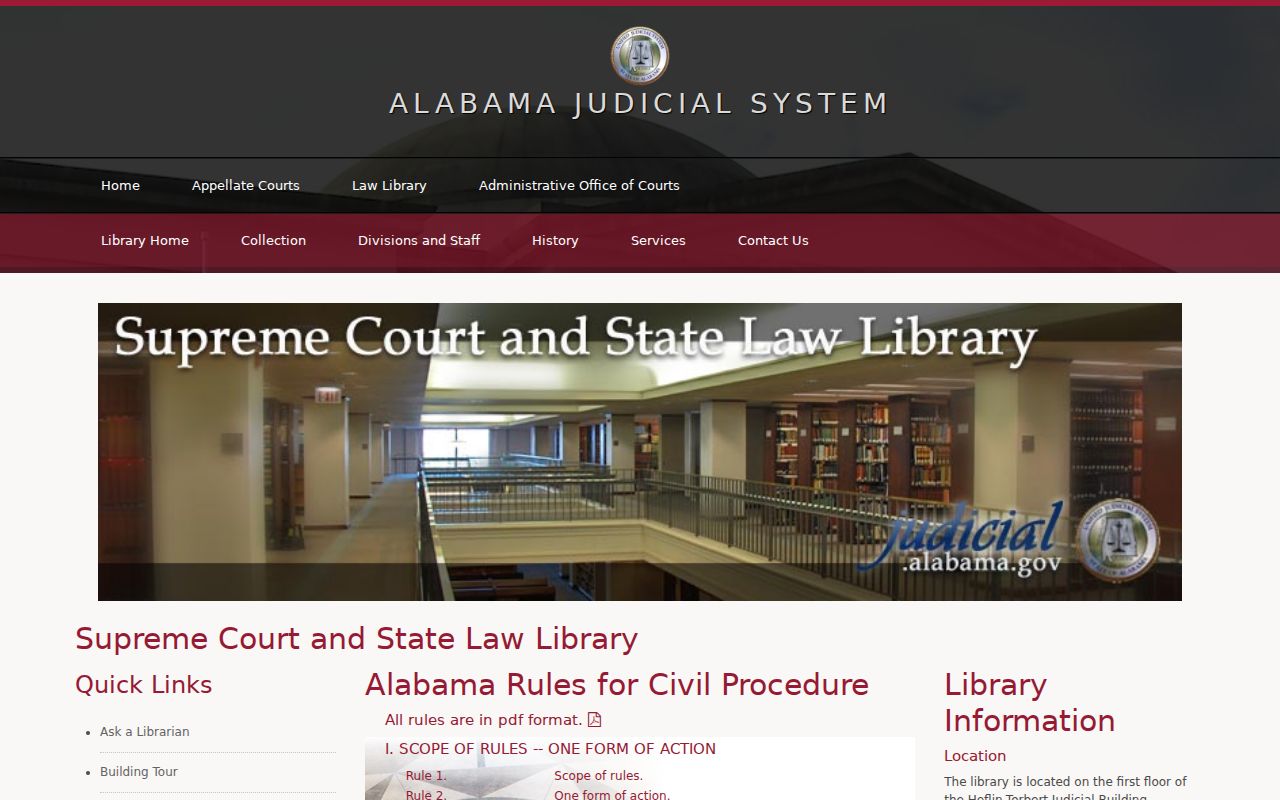
That rules index lets you check civil procedure and clerk records properly. It also keeps a local filing-fee chart from being mistaken for a prediction of how a Cherokee County case will unfold.
Civil Docket Access Rules
Access to Circuit and District court files flows from the Alabama Rules of Court-Record Privacy and Confidentiality. Rule 401(A) guarantees free public viewing. The electronic docket and court records can be viewed at the clerk's office during regular business hours. Rule 401(B) permits copy charges for most nonparty requests, with mailing postage on the requester. Remote subscriber access is recognized under Rule 401(C).
Key Rules:
Rule 401 protects free in-office viewing while distinguishing it from paid copies and remote service.
Rules 201 through 202 cover exempt and confidential court information that may not appear in an ordinary public view.
Rules 301 through 303 govern sealing, redaction, and a request for judicial access to restricted material.
A missing online image does not mean the civil case is sealed. The file may simply be older. It may sit in another division, readable only at the clerk terminal. Or it may be limited to a paid remote path. Ask about the status of the exact item. If access is restricted, ask which rule or order applies. Then ask what court process exists to challenge it. Clerk staff cannot override a sealing order.
Older Cherokee County Civil Dockets
A blank screen after a Cherokee County civil docket search does not mean the case never existed. The case may simply predate the system. Older civil files were never loaded into the current remote system. Other culprits hide behind that same "no result" message. A misspelled name could be the problem. So could the wrong division, a transfer, a separate Probate Court file, restricted access, or the limit of a paid search. Call the Circuit Clerk with whatever you know. Bring the rough filing year, the party names, the division, and any case number you have. Ask where the file physically lives now. It might sit in paper, on microfilm, off-site, or with the Alabama Department of Archives and History.
The official request form lets you order something narrow. Local research lists a $10 computerized search. A paper search runs $20. An archived or microfilm search runs $25. Copies run $5 for pages 1 through 20, then $0.50 per later page, and certification adds $5. The form also asks for a $5 deposit. Once the balance is quoted, send a cashier's check or money order, plus a self-addressed stamped envelope. Plan on two weeks. Confirm current fees, postage, and delivery options before mailing any funds.
One more tip on ordering. Requesting a single judgment by entry date and title often beats ordering the whole file. A certified judgment is not the same thing as a plain docket printout. So say up front whether certification is required. Then name the specific order that must serve your court-record purpose.